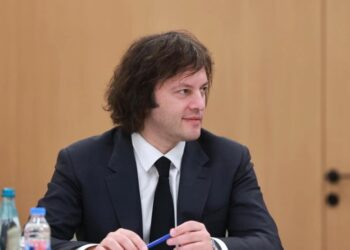
Tbilisi is hosting the 30th Business Forum dedicated to the 35th anniversary of ties between Georgia, Israel, and the World Jewry. The event is organized by the Israel-Georgia Chamber of Business and the Israeli House, two institutions that have spent years strengthening Georgia’s multifaceted relations with Israel and Jewish communities worldwide.
Among the guests are official representatives from Georgia and Israel — members of government, public figures, city mayors, international organizations, and around 100 business leaders from Israel, along with Georgian business executives.
Greetings from members of the Knesset will also be read at the opening ceremony.
This is far from the first high-level delegation visit organized by the Israel-Georgia Chamber of Business and the Israeli House. Both institutions are among the few — if not the only ones — that have enjoyed decades of consistent support from the Israeli government, the Knesset, and the country’s senior leadership, beginning 35 years ago with President Chaim Herzog, and continuing today with his son, the current President of Israel, Isaac Herzog.
The forum will summarize economic and business relations between Georgia and Israel, explore new tourism-sector plans between the two countries, and present new tourism projects. Guests will also be introduced to the Biblical Route of Jewish Cultural Heritage, implemented under the auspices of the Council of Europe and beginning in Georgia.
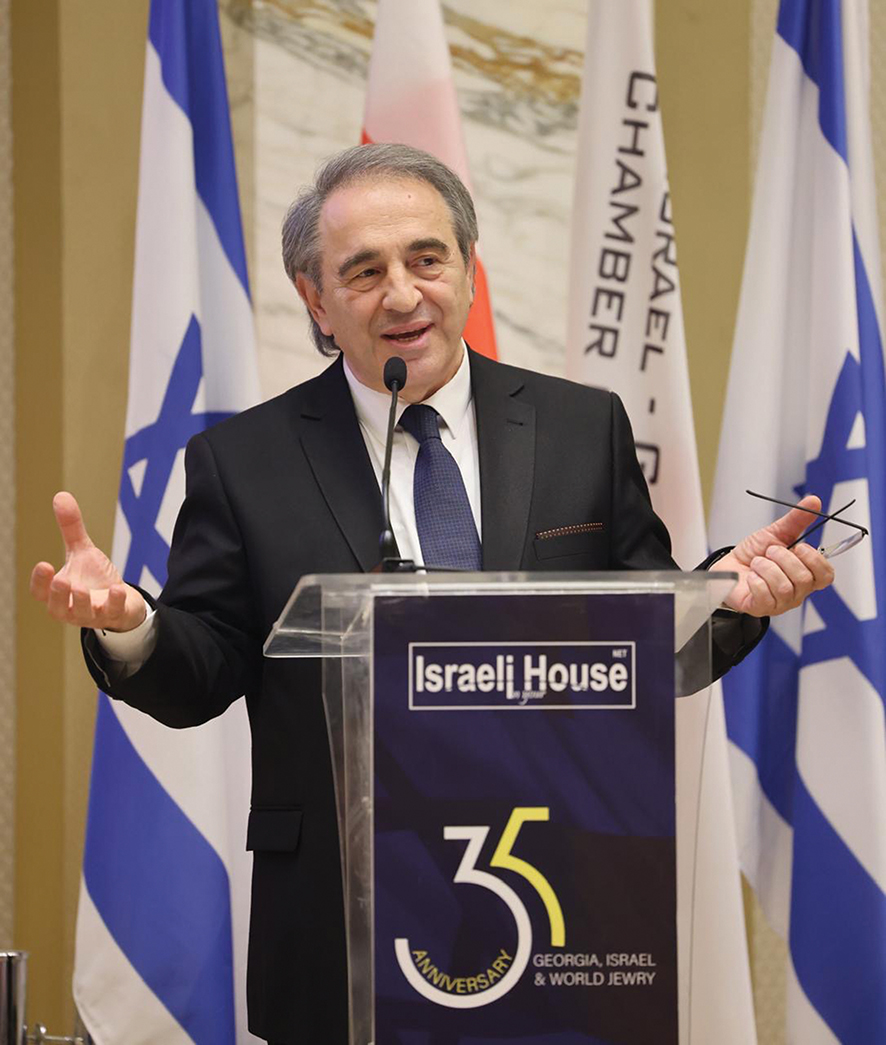
The opening ceremony will feature the lighting of the Hanukkah candle.
The multi-day forum will include panel discussions and workshops on a range of topics, including:
• Prospects for increasing travel from Eastern European countries to Israel and strengthening bilateral tourism;
• Strategies for reaching 500,000 Israeli tourists annually traveling to Georgia;
• The work of the Israeli House in 27 countries and the opening of its central office in Jerusalem in 2026;
• Results of city-to-city twinning partnerships between Georgia and Israel, with several new pairings to be announced, including Akhmeta and Rishon LeZion;
• Strengthening international brands in the tourism industry;
• Rising interest from Israel’s film industry in Georgia and upcoming productions (including a promo film screening);
• Presentation of a Georgian–Israeli startup as a successful model of joint innovation.
The Israel-Georgia Chamber of Business was the initiator behind a new bilateral economic cooperation plan developed during the global crisis. The plan focuses on expanding cooperation in agriculture, boosting Georgian exports to Israel and the Jewish diaspora, and developing new trade routes. With the Chamber’s direct involvement, several premium Georgian export products have already received internationally recognized Kosher certification, and this process continues.
A dedicated panel will focus on antisemitism, where Israeli guests will meet emerging Georgian leaders. The discussion will also examine how global cities can contribute to combating antisemitism, and how Jewish cultural heritage can serve as a tool for dialogue and cooperation among nations.
Parallel to the forum, an exhibition of artworks by Israeli painters and presentations of business projects will be held.
The event will be covered by Georgia’s leading television channels and the Israeli press. The forum will highlight Georgia’s achievements over the past 35 years, its safe environment for tourists and investors, and its growing potential.
According to Itsik Moshe, President of the Israel-Georgia Chamber of Business and Chairman of the Israeli House, the organizations he has led over the years (the Jewish Agency for Israel, the Israel-Georgia Chamber of Business, and the Israeli House) serve two friendly nations — Georgia and Israel.
This business forum, he says, is a joint preparation for the next 35 years.
Several joint projects will be signed at the forum under the management of the international company Wyndham. Official representatives from Georgia and Israel will deliver remarks, and visiting Israeli guests will also attend presentations of business concepts intended to attract new interest. Around 25 business meetings are planned.
According to Moshe, 35 years is enough time for both sides to form a clear vision, set goals for each other’s countries, and prepare to walk the path required to achieve them.
“Over these 35 years, the Chamber has proven that achieving results in any field requires deep knowledge of the partner country, building strategy, and working consistently — the results follow quickly.
“Although I had hoped for even greater outcomes, Georgia today has received more than USD 5 billion in contributions from Israel (over 50% of it from tourism) — from a country constantly under attack by hundreds of millions of antisemites and by states that, despite not even sharing a border with Israel, still fire thousands of rockets at it.
“Israel is — and will remain — a model for Georgia: compact, successful, and one of the world’s leading nations.
“In my view, Israel’s Hasbara, or public diplomacy, fully serves Georgia, because it enables Georgia to see the real Israel and work with it for mutual benefit,” Moshe says, adding: “In 2022, the attempted assassination organized by Iran’s Revolutionary Guard proved that my path — decades of public diplomacy — was and continues to be the right one.”
The Chairman of the Israeli House identifies five people who significantly influenced the creation of the new reality and strengthened bilateral ties:
• Professor Baruch Gouri, who, during the Soviet era, as head of the Jewish Agency for Israel’s representation, provided the foundational knowledge that shaped his worldview;
• Hilik Bar and David Bitan, former chairmen of the Israel-Georgia Friendship Group in the Knesset, with whom the direction of cooperation transformed — from “Georgian and Georgian-Jewish relations” to broader Georgia-Israel relations;
• Akram Hasson, whose support ensured large-scale backing for the Israeli House in the Knesset;
• and Foreign Minister Eli Cohen, who—despite resistance from certain circles toward the Israeli House’s new working model—stood objectively beside the organization, opening doors to global institutions.
By Ana Dumbadze