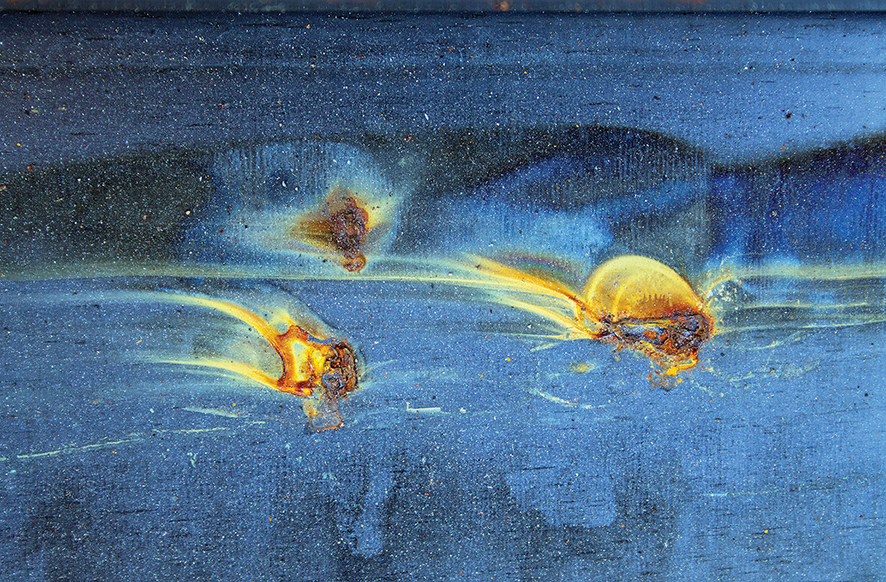
I have decided that there can never be too much rust. This is partly because it remains an endless source of images for me as a seer and photographer. Its mix of randomness and order just clicks with who I am as an artist, and with my worldview.
So, yes, I made another trip to the huge Soli steelyard in Tbilisi recently. It had been a year since my last trip there: much more than enough time for several important things to have changed.

For one, as this is a flourishing business, much steel had been bought by people needing it for construction and other purposes. Sizes range from about 30 cm on a side to about 2 by 8 m (sheets), with round or square tubes of similar dimensions. So, as pieces are bought, they uncover new ones underneath them.
This means that a) I can see things previously covered, and b) the weather can see them too: there is no roof here to shield from it. Of course, there has been rain, and snow, and simple humidity. All of this moisture has wrought its magic on the iron and steel receiving it, turning new blues red, orange, yellow. There are even some greens and purples mixed in, for which I don’t have enough scientific knowledge to explain.
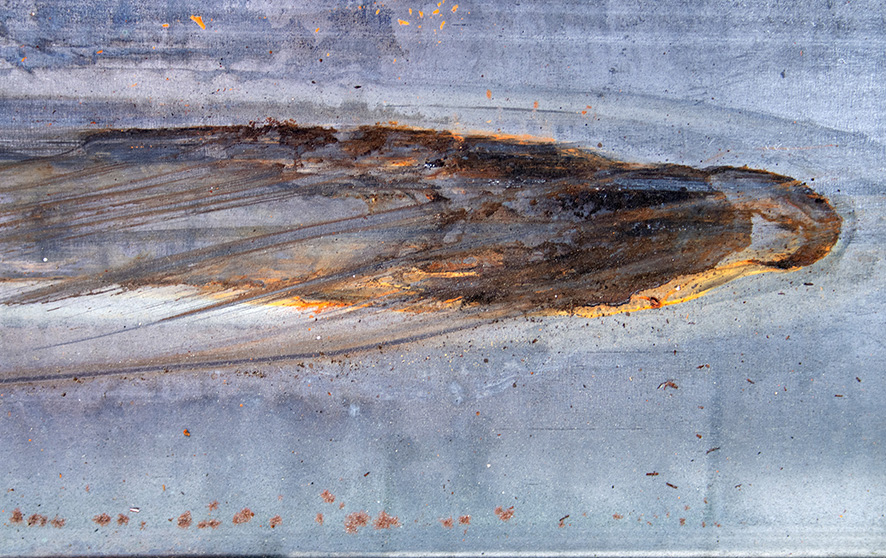
The main change I discovered in Soli’s office, however, is that the high-ranking man who used to call me “sidze” (son in law) passed away suddenly in September, while we were still in Svaneti. He had the same last name as my wife, Skirtladze, hence the connection. Sadly, she never got to meet him. After expressing my sorrow and condolences, and presenting the office staff with a new rust image to hang on the wall, I was of course allowed to roam the yard in search of more inspiration.

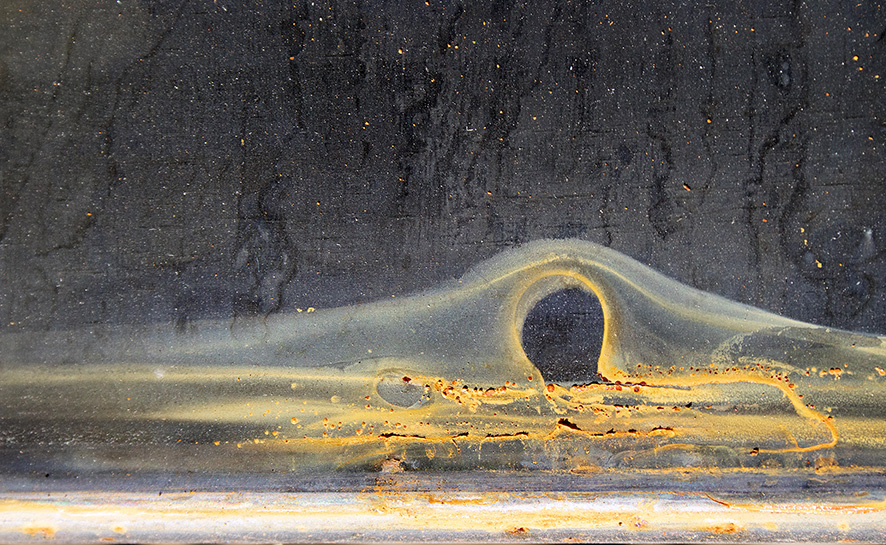
I have realized that a Japanese screen print artist has inspired some of the look I seek in my rust images: Tetsura Sawada. His prints combine layers of natural landscape elements and perfectly straight horizon lines. I, too, seek to keep straight lines in my shots perfectly horizontal or vertical, and often find frames which seem like abstract landscapes, too. I have been fond of Sawada’s work since I first saw it in the 1980s, and hope someday to acquire an original screen prints of his, not merely a poster.
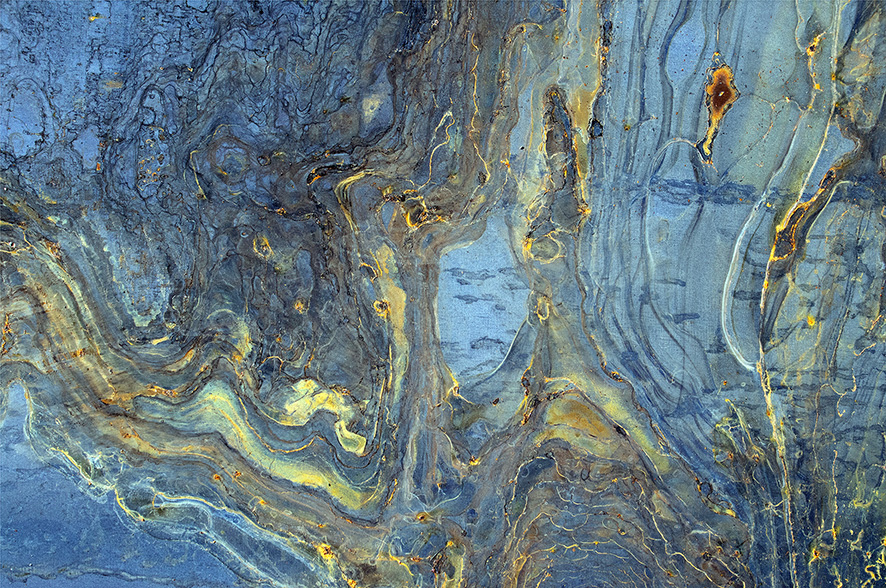
It took me a couple of hours to explore. This time, I was using a special technique to allow my final images to be about four times the area of their shot pixel size. I’ll avoid the technical details here, but it starts with shooting several or many frames of the same thing, but handheld, not tripod-mounted. These are then combined in Photoshop in a particular way.
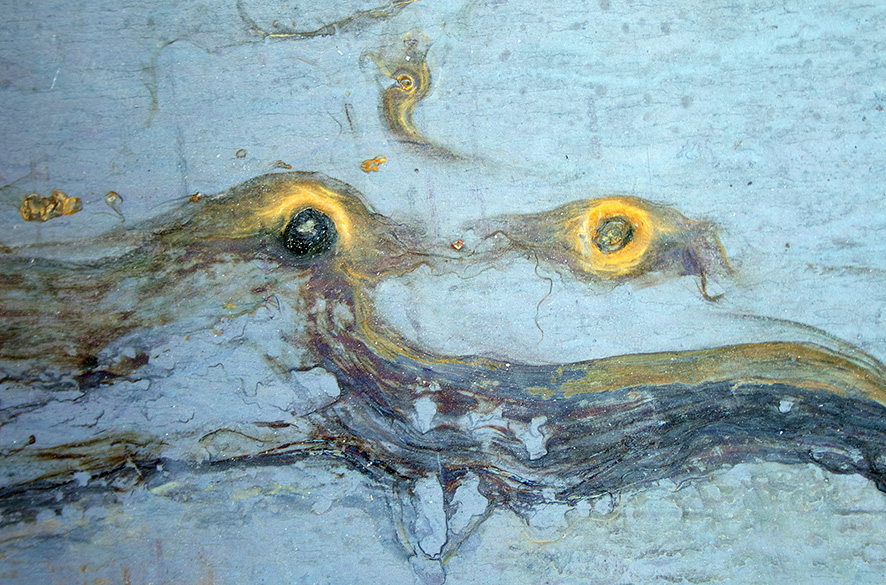
Once again, I found myself thinking: could I ever BUY that particular large sheet of steel, for its wonderfully chaotic order of details? There are many practical details involved, never mind transporting such a thing off-site. It must be handled in such a way as to minimize any changes to its delicate surface, from there all the way home, and then installed in the same manner. But it’s heavy, too, so, better not to try to hang it on the wall. One would build a floor stand for it. Even dusting it would need to be done very carefully, with a feather duster. Ironic that something to strong as steel needs such care in handling: all because the rust on it is much more fragile. Once in place, it would then slowly continue to change over time, but now only due to moisture in the room (our breath, mostly). Hmmm.
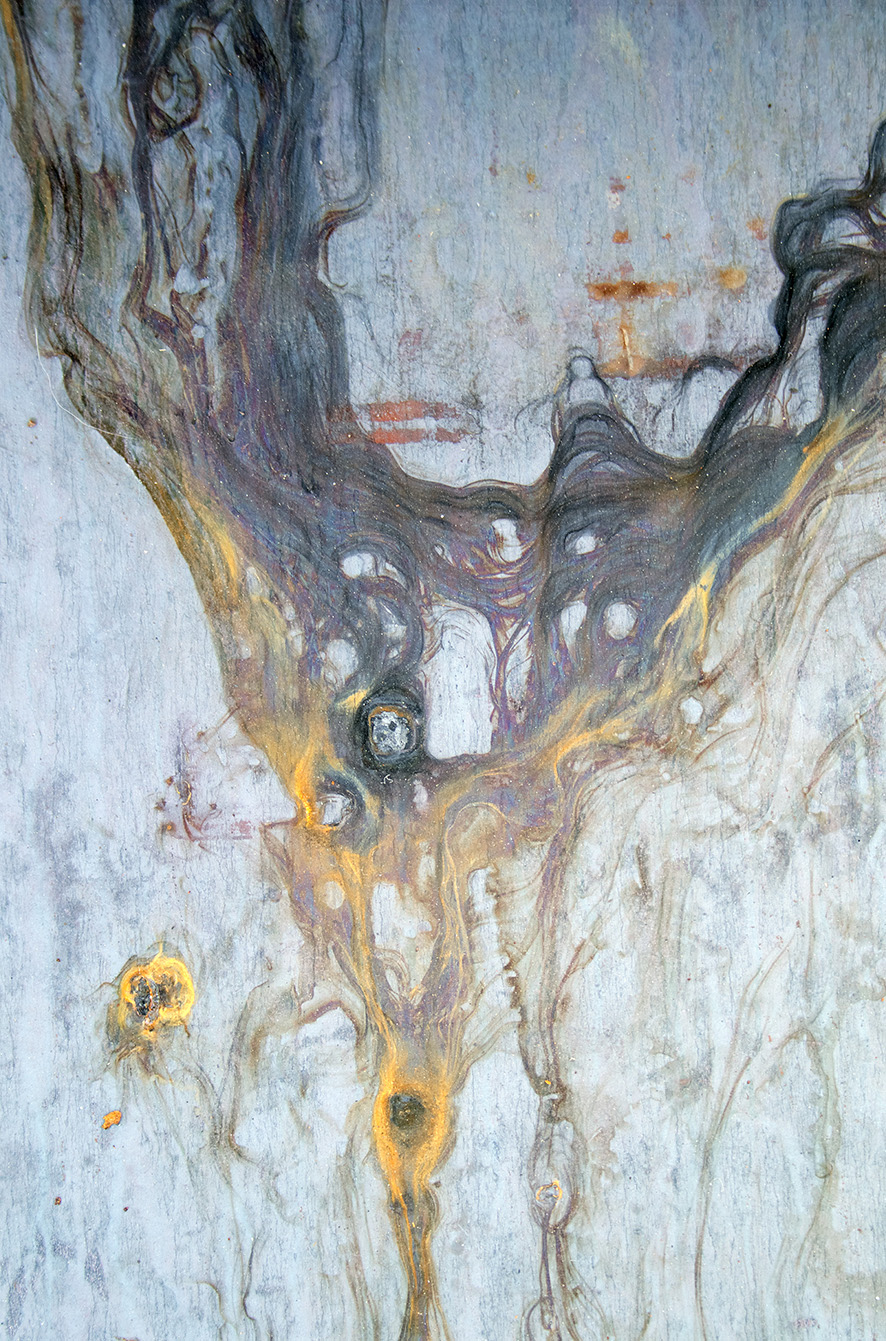
Anyway, I came away with over 140 finished images, which is most satisfying. There has already been rain since that late-November visit, too… so, more awaits. I’ll get to it.
PS: Yes, I DO enhance the colors.
Blog y Tony Hanmer
Tony Hanmer has lived in Georgia since 1999, in Svaneti since 2007, and been a weekly writer and photographer for GT since early 2011. He runs the “Svaneti Renaissance” Facebook group, now with over 2000 members, at www.facebook.com/groups/SvanetiRenaissance/
He and his wife also run their own guest house in Etseri: www.facebook.com/hanmer.house.svaneti