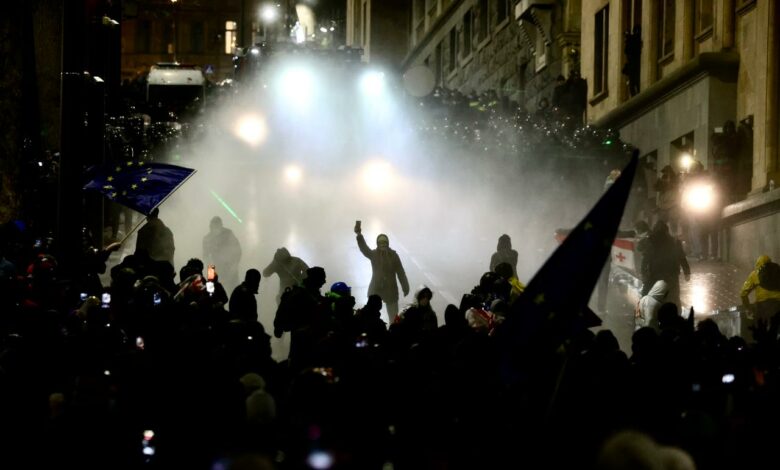
Georgia’s State Security Service says its investigation has fully addressed all questions raised by the BBC’s recent report alleging the use of a World War I–era chemical agent during last year’s anti-government protests. The Deputy Minister of Internal Affairs Aleksandre Darakhvelidze stated that the inquiry found no evidence supporting the BBC’s claims, concluding instead that the information presented in the investigation was false.
Darakhvelidze noted that the probe was extensive: more than 160 investigative actions were carried out, nearly 90 individuals were questioned and all relevant documents and examinations were reviewed. Based on these findings, he said, the Ministry of Internal Affairs acted within the law.
Central to the BBC’s allegation was the supposed use of ‘camite,’ a chemical agent historically identified by the French military. The State Security Service reported that no such substance was ever purchased by the ministry. Instead, officials said that during the night of 4–5 December, authorities deployed chlorobenzylidene malononitrile, commonly used in crowd control, dissolved in propylene glycol and emphasized that neither substance falls under prohibited categories.
The BBC report, which cited whistleblowers, medical professionals and chemical weapons specialists, suggested that Georgian authorities had used a banned chemical weapon. With the official inquiry now concluded, the government asserts that the allegations were unfounded and that no prohibited agents were used.