The European Union’s Erasmus+ program has announced the launch of 73 new international projects under its Capacity Building in Vocational Education and Training (CB VET) initiative, allocating over €27 million to support skills development, labor market alignment, and institutional cooperation worldwide. Among the countries involved, Georgia has significantly deepened its engagement, participating in several projects designed to modernize its vocational education sector and bring it closer to EU standards.
While Georgia does not coordinate any of the newly approved projects this year, it remains a committed and active partner. In 2025 alone, eleven project participations by nine Georgian institutions have been confirmed. These include public vocational colleges, universities, private sector organizations, and NGOs. Since 2022, Georgia has taken part in ten CB VET projects in total—an indicator of growing institutional capacity and European cooperation.
Several of the new projects in which Georgia is a partner are poised to deliver tangible benefits. One of the most ambitious, Hubs for Change: VET as an Entrepreneurial Vehicle in the Eastern Neighborhood, coordinated by Greece with support from Lithuania, aims to transform vocational education providers in Georgia, Azerbaijan, Moldova, and Ukraine into entrepreneurial hubs. This project targets young learners, unemployed adults, women, and NEETs (youth not in employment, education, or training) by fostering innovation, business incubation, and local economic integration.
Another major initiative, Empowering Smallholders through Precision Agriculture Training to Bridge the Technology Gap in Ukraine and Georgia, also coordinated by Greece with German partners, focuses on integrating precision agriculture technologies into VET systems in Georgia and Ukraine. With smallholder farms accounting for the vast majority of agricultural land in both countries, the project seeks to enhance productivity and sustainability by modernizing training curricula and linking VET institutions more closely with agricultural industry needs.
Georgia is also participating in VET Caucasus, a partnership with Armenia coordinated by Latvia and supported by Belgium and Italy. This project aims to reform vocational education frameworks to better reflect EU qualification standards. With Georgia’s EU candidate status granted in 2023, aligning its National Qualifications Framework with the European Qualifications Framework has become a national priority. This project supports that goal by strengthening curriculum development, teacher training, and labor market relevance.
Further strengthening women’s role in the agricultural sector, Enhancing Women Entrepreneurship in AGRIculture in Georgia through Targeted Vocational Education and Training is coordinated by Greece’s University of Peloponnese with aid from Lithuania’s ‘Europiniu inovaciju centras’. This initiative focuses on empowering women-led businesses in Georgia’s rural areas, promoting gender equality alongside skills development.
Beyond Georgia, the Erasmus+ program has prioritized VET improvements across several Eastern Partnership countries. Moldova, Ukraine, and Azerbaijan also feature prominently in this year’s projects. For example, a project titled Strengthening the Capacity of Vocational Education and Training through Environmental Learning and Digital Tools is coordinated by Poland and includes participation from a Ukrainian-founded Swedish NGO, Mirakademien, and several Ukrainian organisations.
In Moldova and Ukraine, the project From Community-based Intangible Cultural Heritage to Social Entrepreneurship aims to preserve craftsmanship traditions while encouraging social entrepreneurship. This project is coordinated by Romania with assistance from Portugal and Spain. Additionally, Moldova benefits from a series of initiatives aimed at modernizing its VET sector, such as Work-Based Learning Quality Assurance in VET in Moldova – from EQAVET to WBL Quality, coordinated by Germany with Austrian support, and a project led by the Dutch Center for Innovation of Education and Training (CINOP) focusing on digital and green transitions, curricula development, and improved labor market participation among vulnerable groups.
Georgia has significantly deepened its engagement, participating in several projects designed to modernize its vocational education sector and bring it closer to EU standards
Mental health education is also being integrated into vocational training through the Mental Health Matters: Strengthening VET and Social Assistance Capacities project, coordinated by Cyprus with partners from Greece and Italy. This initiative seeks to strengthen Moldova’s VET system by incorporating mental health awareness and training for social assistants.
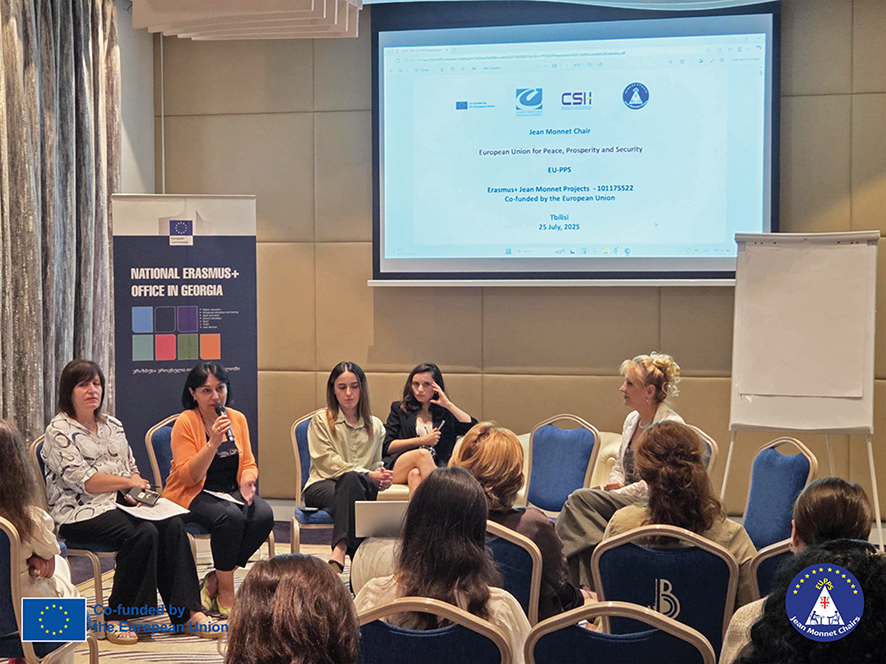
The National Erasmus+ Office in Georgia has reaffirmed the country’s firm place in the program, responding to recent public confusion about Georgia’s status. “Georgia continues to be an active and valued partner in the Erasmus+ program,” the office said in an official statement. “All planned and ongoing actions remain fully supported and operational. We urge institutions, students, and stakeholders to rely only on official channels for accurate information.”
In its 2025 CB VET report, the National Office also noted that capacity building in vocational education is playing a transformative role in Georgia. It is enhancing workforce skills, introducing digital and green tools, and tightening the connection between education and the real economy. While Georgian institutions currently serve as project partners rather than leaders, their growing participation is seen as a stepping stone toward greater regional leadership in the future.
Challenges remain, including gaps in digital infrastructure, limited technology access for rural and smallholder communities, and outdated curricula in certain sectors. Still, the CB VET framework is helping to close these gaps by bringing European best practices, funding, and institutional know-how to Georgia’s vocational sector.
This latest round of Erasmus+ projects spans 73 countries, with initiatives stretching from Eastern Europe and the Western Balkans to Sub-Saharan Africa and Latin America. As the projects unfold, Georgia’s government, education sector, and civil society hope to see direct benefits in terms of improved employability, smarter training systems, and stronger regional collaboration.
In the broader context of Georgia’s European integration, these projects are more than symbolic. They offer a practical pathway to bring Georgian vocational education closer to EU norms while preparing the workforce for a greener, more digital, and more competitive economy.
By Team GT