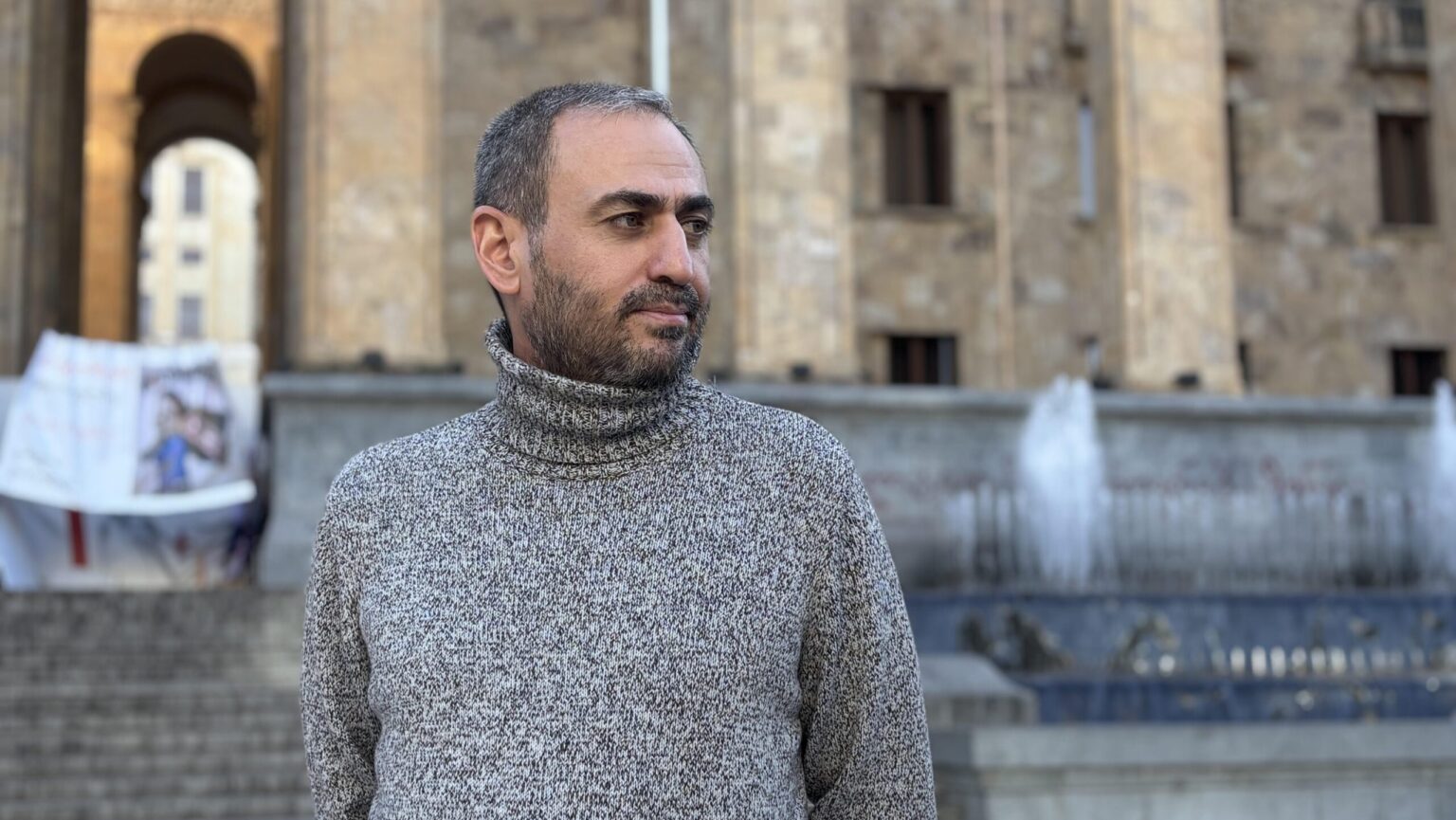
A court in Azerbaijan’s Binagadi district has ordered the detention of journalist Afgan Sadygov.
Sadygov’s lawyer said criminal proceedings launched against the journalist in 2024 are being reopened after the court overturned a previous decision by the Prosecutor General’s Office to terminate the case.
“The Prosecutor General’s Office closed the criminal case initiated against Afgan Sadygov in 2024. The alleged victims appealed to the Binagadi District Court, requesting the cancellation of the Prosecutor General’s final decision. Today, the court reviewed the complaint, annulled the decision of the Prosecutor General’s Office, and upheld the request of the complainants. As a result, the case against Afgan Sadygov has been reopened for further investigation. On the same day, the Binagadi District Court ordered Sadygov’s detention until July 30,” the lawyer said.
In 2024, criminal charges were brought against Sadygov, the founder of the online television channel Azel TV, under Article 182 of Azerbaijan’s Criminal Code, which concerns extortion through threats.
Prosecution says Sadygov allegedly demanded money through blackmail from Fatulla Muradov, the executive representative of Kurkand village in the Neftchala district, as well as from the mayor of Khazarkand village in the same district.
On August 4, 2024, Sadygov was arrested in Georgia at the request of Azerbaijan’s Prosecutor General’s Office. The Tbilisi City Court approved his detention and extradition to Azerbaijan. However, the European Court of Human Rights prohibited the extradition.
Sadygov was released in April 2025. On April 1, 2026, Azerbaijan’s Prosecutor General’s Office terminated the criminal case against him. Two days later, the Tbilisi City Court lifted a travel ban imposed on the journalist, citing the Prosecutor General’s final decision.
However, on the night of April 4, 2026, Sadygov was forcibly removed from his home in Tbilisi and deported to Azerbaijan. The European Court of Human Rights subsequently issued a special statement criticizing what it described as a serious violation of the law by the Georgian authorities.
Following his deportation, Sadygov told journalists that the Azerbaijani authorities do not immediately arrest opponents who return to the country, but do so at a later stage.
Sadygov denies all allegations against him and maintains that the case is linked to his journalistic activities.
International human rights and media organizations have strongly condemned both his detention in Georgia and his transfer to Azerbaijan.